
Author's POV ✨
The airport buzzed with voices, rolling suitcases, and hurried footsteps—but Hazel felt strangely still within it all.
She sat by the large glass window, her backpack resting at her feet, the world outside moving faster than her thoughts. Slowly, she reached for the locket around her neck.
They looked… alive.
Duskwood alive.
Hazel’s throat tightened. Her fingers traced the tiny photograph as if touch alone could bridge years of absence.
“You were happy there,” she whispered. “Weren’t you?”
Her eyes welled up, but she blinked quickly, closing the locket with a soft snap.
Not now.
She stood, wiped her palms on her jeans, and headed toward the food store—because crying on an empty stomach felt illegal. After a moment of intense internal debate, she grabbed something quick, ate standing near the counter, and checked her phone for the tenth time.
Gate announced.
Luggage checked.
Documents secured.
Everything was in place.
As Hazel walked toward the boarding gate, she took one last look around—at the place she was leaving behind and the journey she was about to begin.
Her grip tightened around the strap of her bag.
“Duskwood,” she murmured, a small smile playing on her lips, “here I come.”
She stepped onto the flight.
Unaware that she wasn’t arriving somewhere new—
She was returning.
After eight—maybe nine—long hours, the plane finally descended.
Hazel pressed her forehead lightly against the window.
Duskwood welcomed her with soft sunlight—not harsh, not cold. Just warm enough to feel kind. The weather wasn’t chilling like she had imagined; instead, a gentle breeze moved through the air, carrying the scent of trees and something old…
something lived-in.
The town unfolded below her like a painting.
Green everywhere. Tall trees lining the roads, flowers spilling over fences, nature breathing freely alongside neatly built streets, cafés, hospitals, and old stone structures that stood proudly among modern life. It wasn’t overcrowded. It wasn’t empty either.
Balanced.
Alive.
Just like her mother had described.
Just like the photographs.
Hazel smiled without realizing it.
After collecting her luggage, she booked a cab and gave the address she had memorized long ago—the one her mother used to call home.
The drive felt unreal.
Every house they passed was wooden—two storeys mostly, some with balconies wrapped in climbing vines, others with large windows framed in white. It felt as though time had slowed here, preserving a Victorian elegance beneath the modern world.
No wonder, Hazel thought.
This place had once been ruled by the Victorian era.
It is still remembered.
The cab stopped.
Hazel stepped out slowly.
There it was.
Her mother’s house.
A two-storey wooden home stood quietly before her, warm brown panels glowing softly in the sunlight. The surroundings were peaceful—trees whispering, birds calling, the kind of silence that didn’t feel lonely.
She turned once, taking it all in.
Then unlocked the door.
Inside, the house was clean. Loved. Maintained. The caretaker had clearly done their job well—but Hazel didn’t stop there.
She rolled up her sleeves.
Curtains were changed. Furniture rearranged. Windows opened wide to let the light flood in. Little things moved, adjusted, made hers. Three… four constant hours passed like nothing.
By the time she finally stopped, breathing lightly, the house felt complete.
Not new.
But alive again.
As she climbed the stairs, her eyes caught something on the wall.
A framed photograph.
Her mother.
Vivien.
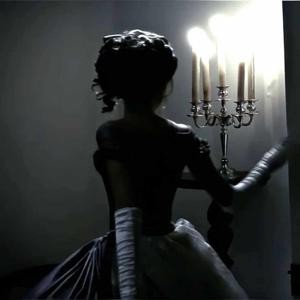
She stood in a Victorian ball dress, elegant and radiant, holding a lace umbrella delicately in one hand. Her smile was soft, confident—and there it was. The tiny beauty spot near her lips .
Hazel stepped closer.
For a moment, the world went quiet.
“You were beautiful,” she whispered.
And somewhere deep within the wooden walls of that house, history listened.
The first night in the house arrived quietly.
Hazel stood in the kitchen, staring at the empty fridge like it had personally betrayed her.
“Okay,” she muttered to herself, tying her hair into a messy bun. “First rule of adult life—food is important.”
A quick grocery run later, she returned with bags heavier than expected and confidence much lower than it had been an hour ago.
The local store was small, familiar, and oddly welcoming—wooden shelves, soft lighting, and a cashier who smiled like she already belonged there.
Back home, Hazel unpacked everything and began cooking.
Simple food. Nothing fancy.
Rice simmered on the stove. Vegetables chopped a little unevenly. The kitchen slowly filled with warmth and the comforting smell of something homemade. For a moment, it felt like home again.
Her phone buzzed.
“Aai” flashed on the screen.
Hazel smiled instantly. “I was just thinking about you.”
“Oh good,” Varshini’s voice replied. “That means you haven’t forgotten me already.”
“I landed safely,” Hazel said. “The house is beautiful.”
“And the boys?” her grandmother asked immediately.
Hazel froze. “What boys?”
“Arre! Neighbours? Students? Anyone handsome?” Varshini pressed. “Don’t tell me you crossed oceans just to stare at books.”
“Aai!” Hazel groaned. “I just arrived.”
“Exactly. First impressions matter.”
Hazel laughed, stirring the pot. “I made food. Proper food.”
Varshini hummed approvingly. “Good. Otherwise I would’ve come there myself.”
A knock sounded at the door.
Hazel frowned. “Someone’s at the door. I’ll call you later.”
She opened it to find an elderly woman standing there, wrapped in a shawl, holding a covered dish.
“Hello, dear,” the woman said kindly. “I’m Mrs. Whitmore. I live next door. I heard the house was finally occupied again.”
Hazel smiled warmly. “I’m Hazel.”
The woman extended the dish. “I brought food. First nights should never be spent alone.”
Hazel’s eyes softened. “That’s very kind of you. Thank you.”
Inside, they chatted easily—about the weather, the town, the house. Mrs. Whitmore spoke fondly of Hazel’s mother, her voice tinged with nostalgia.
“She was loved here,” she said simply.
After she left, Hazel’s phone rang again.
“Who was it?” Varshini demanded.
“My neighbour,” Hazel replied.
“A woman?” Varshini asked suspiciously.
“Yes.”
There was a pause. “Hmph. I thought it would be a handsome boy.”
Hazel burst out laughing.
Later that night, Hazel sat by the window with a warm meal, the house glowing softly around her. The laughter from her call still lingered in the air.
She wasn’t alone.
Not here.
Not anymore.
And somewhere, unseen—
The house listened.
The house grew quieter as night settled in.
The kind of quiet that wasn’t empty—but listening.
Hazel lay on her bed for a while, staring at the ceiling, the unfamiliar creaks of wood settling around her. Every now and then, the wind brushed past the windows, making the curtains sway like they were breathing.
She sat up.
“Okay,” she murmured to herself, “either this house is dramatic… or I’m just tired.”
Sleep didn’t come.
Instead, curiosity did.
She slipped out of bed and followed the soft glow of a lamp to the old bookshelf that lined the far wall—one that clearly didn’t belong to modern taste. The wood was darker, heavier. Older.
Her maternal grandfather’s bookshelf.
Hazel ran her fingers along the spines. Many of the titles were worn, written in languages she didn’t recognize. She pulled one out.
Victorian folklore.
Another—Roman myths.
Legends of forgotten eras.
Stories of gods, monsters, and worlds that blurred the line between belief and fear.
Her brows furrowed. “You really liked dark stories,” she whispered.
Then she noticed a small wooden box tucked behind the books.
Carefully, she opened it.
Inside lay an old book—leather-bound, pages yellowed with time.
Vampirism.
Hazel blinked.
She didn’t read. Not really.
She only flipped through the pages.
Sketches of creatures she had only ever heard of in stories—vampires, witches, hybrids, werewolves. Symbols. Diagrams. Words written with unsettling seriousness.
Her heartbeat was quickened—not in fear, but intrigue.
Tucked between the pages were old newspaper cutouts.
So old they nearly crumbled in her hands.
Photographs of men—faces sharp, eyes intense, expressions unreadable. They didn’t look like modern men. They looked… timeless.
Her gaze lingered on one of them longer than the rest.
She frowned.
Then—without realizing it—her cheeks warmed.
Hazel snapped the page shut instantly. “Okay. That’s enough drama for one night.”
She placed everything back exactly where it belonged, closed the box, and returned to her room.
Climbing into bed, she pulled her oversized teddy bear into her arms.
“Mr. Cuddles,” she whispered seriously, “you’re my emotional support tonight.”
She buried her face into the plush fur, exhaustion finally claiming her.
The lamp clicked off.
In the dark, the house stood still.
And somewhere deep within its walls, something ancient smiled—
Because she had looked.
And that was enough.
Sleep refused to come easily.
Hazel lay awake, staring into the dark, Mr. Cuddles tucked tightly against her chest. The house had gone completely silent now—no wind, no creaks, no sounds to blame on old wood or a restless night.
Her thoughts wandered.
The books.
The photographs.
That unfamiliar warmth in her cheeks she still didn’t have an explanation for.
She shifted slightly, eyes heavy but mind alert.
And then—
She felt it.
A gentle pressure against her hair.
Not sudden. Not forceful.
Slow.
Careful.
As if someone’s fingers were moving through her hair, smoothing it back with an intimacy so natural it didn’t immediately frighten her.
Hazel’s breath caught.
Her body stiffened for half a second… then relaxed.
It felt warm.
Familiar.
Like the kind of comfort you don’t question—like when a parent brushes your hair back when you’re sick, or when someone stays after you’ve already fallen asleep.
Her eyelids fluttered.
“Must be tired,” she murmured faintly.
The touch lingered just long enough for her breathing to even out, her grip on the teddy bear loosening as sleep finally claimed her.
When her chest rose and fell in a steady rhythm, the warmth withdrew.
The room remained exactly the same.
No footprints.
No shadows.
No proof.
Only the quiet certainty that she had not been alone.
And that Duskwood had already noticed her.
Write a comment ...